
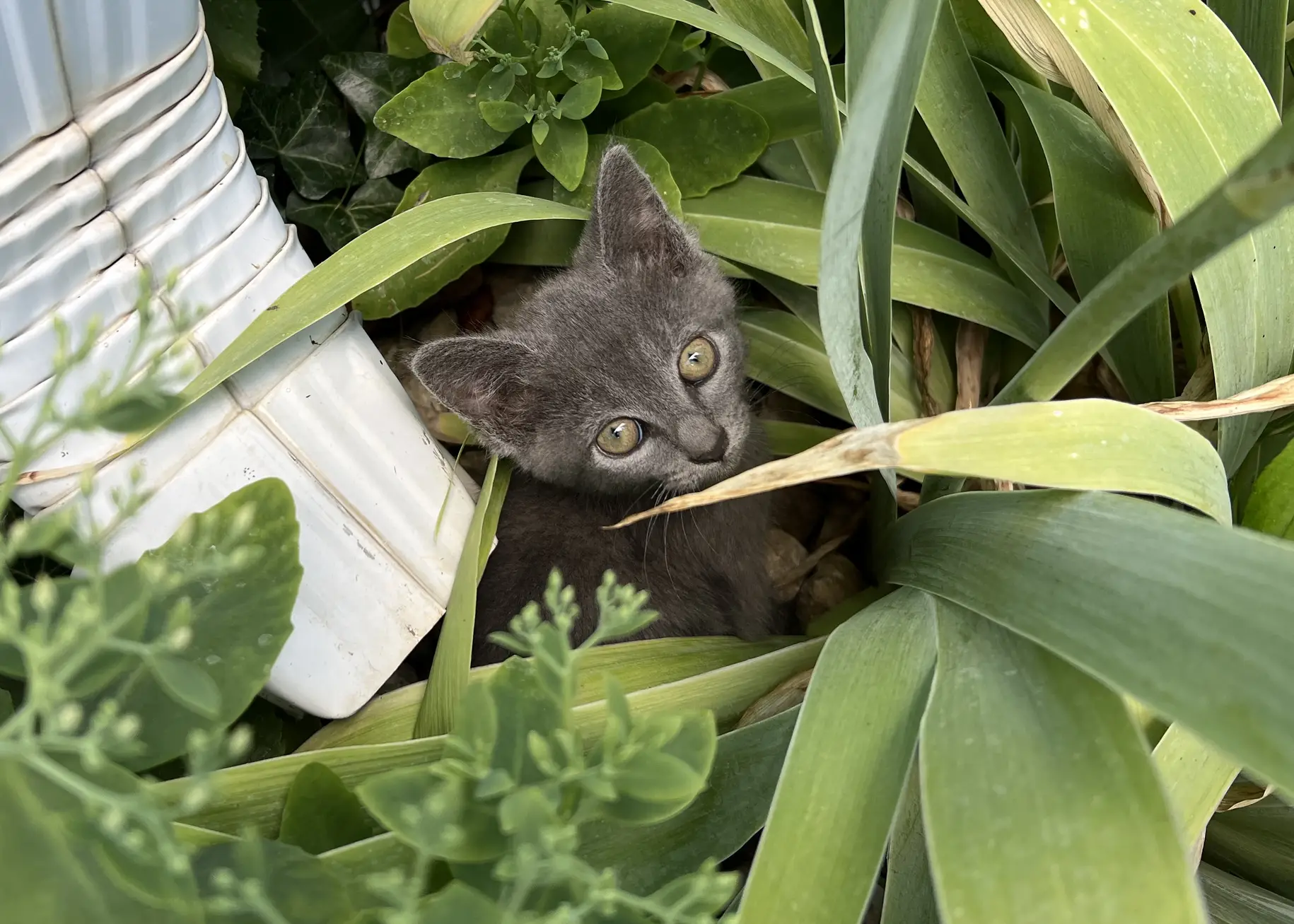
Watch and Wait!
When you hear the sweet little squeaks of a cuddle pile of precious babies, the most important thing you can do is WATCH AND WAIT. Seeing defenseless little kittens with no mother in sight makes us want to act immediately, but chances are mama cat is nearby—and the worst thing we can do is interfere. Taking kittens away from their mother jeopardizes their survival. First and foremost, we want you to help get the word out to “Leave Them Be!”
The Flour Trick: How to Know If Mom Returned
Nursing moms need to eat and will leave their litter to find food or watch them from a safe distance while they sleep. Mom burns lots of calories feeding her litter, and the healthier she is, the healthier her kittens will be. Also, keep in mind that mother cats select their nests carefully and always have backup locations. If you find kittens alone, mom may simply be in the middle of moving her litter to a new spot one by one—especially if she feels humans are getting too close.

Most of us don’t have time to go into full-on stakeout mode with snacks and binoculars to see if mama is coming back. That’s why we bring out the flour!
How it works: Sprinkle a ring of flour in a circle around the nest.
Check the nest: Recheck the spot every 5 to 6 hours.
Look for tracks: If mama has returned, you’ll see her footprints left in the flour ring, or notice that the kittens have shifted positions, are warm, and are breathing comfortably.
Watch our video breakdown on the flour trick and spread the news: https://youtu.be/Ou11JlkJv0w
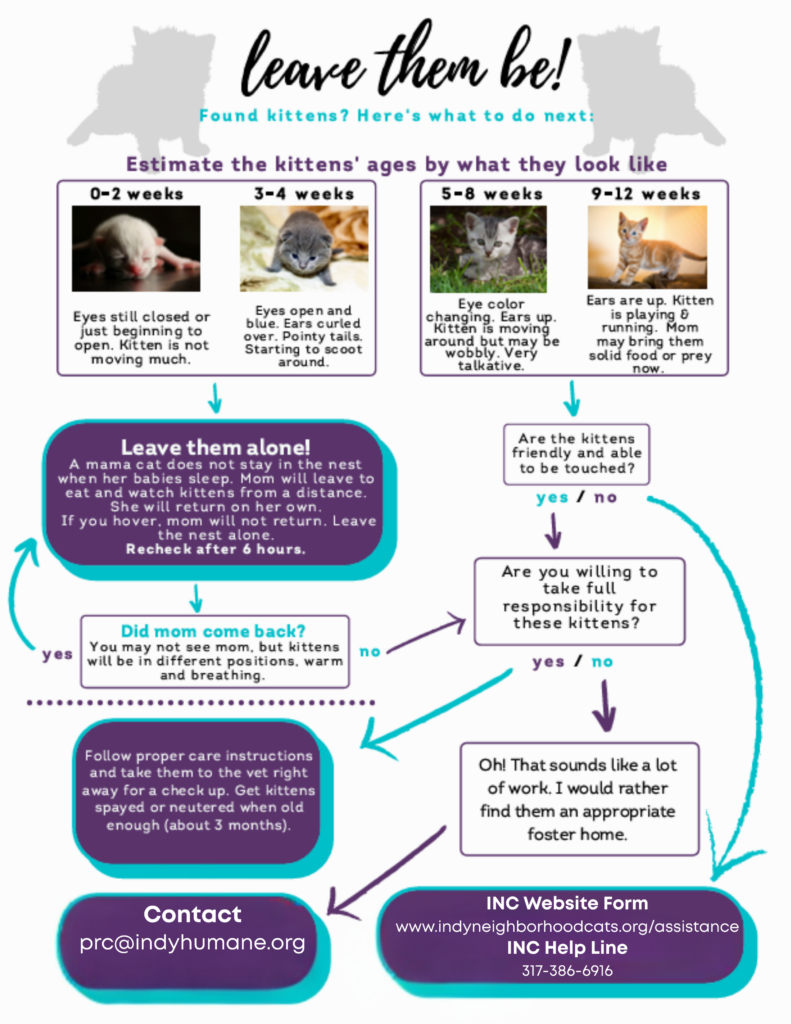
Step 1: Estimate the Kittens’ Age
Before taking action, check their physical features to estimate their age:
0–2 Weeks: Eyes are closed or just beginning to open. Ears are folded down, and kittens are not moving much.
3–4 Weeks: Eyes are open and blue. Ears are starting to curl over, tails are pointy, and kittens are starting to scoot around.
5–8 Weeks: Eye color is changing and ears are upright. Kittens are moving around but may be wobbly; they are very talkative.
9–12 Weeks: Ears are fully upright. Kittens are playing and running; mom may start bringing them solid food or prey.
Step 2: Decision Flow & Action Plan
If Mom Returns: Leave them be! Follow proper care instructions, keep the family together, and bring them to a vet for a checkup when appropriate. Get kittens spayed or neutered once they are old enough (around 3 months).
If Mom Does NOT Return: If mama cat hasn’t returned after checking the flour ring, evaluate the kittens based on their age and temperament:
Friendly Kittens (5–12 Weeks): If kittens are friendly, able to be touched, and eating on their own, they can enter a foster program to be adopted as pets. Email IndyHumane at
prc@indyhumane.orgorIndyCares@indy.govto request foster placement. You will know the time is right when mom starts bringing the kittens to find food for themselves.Unsocialized / Feral Kittens OR Unwilling to Take Full Responsibility: If the kittens are not friendly/handling-tolerant, or if you are unable to take full responsibility for foster care, reach out directly to Indy Neighborhood Cats for assistance with community trapping and spay/neuter resources.
Relevant Quick Links
Below you’ll find links to the relevant resources mentioned in the article. If you’re still unsure of what to do, please reach out to us with your questions or concerns.
Quick Links
Indy Humane
- 317.872.5650 x113
- prc@indyhumane.org
- indyhumane.org/prc
Indy Neighborhood Cats
- 317.386.6916
- info@indyneighborhoodcats.org
- Request for Assistance
- Flour Trick Demo