

Information and Procedures for Relocating Community Cats
If there is no other choice, then relocation of feral/community cats must be done carefully. Many people don’t realize you can’t take feral cats and simply let them go in a new territory and expect they’ll stick around. Most of the time, they won’t. If you have determined the cats must be relocated, please follow the following guidelines to increase the chance of success.
Preparation for Relocation
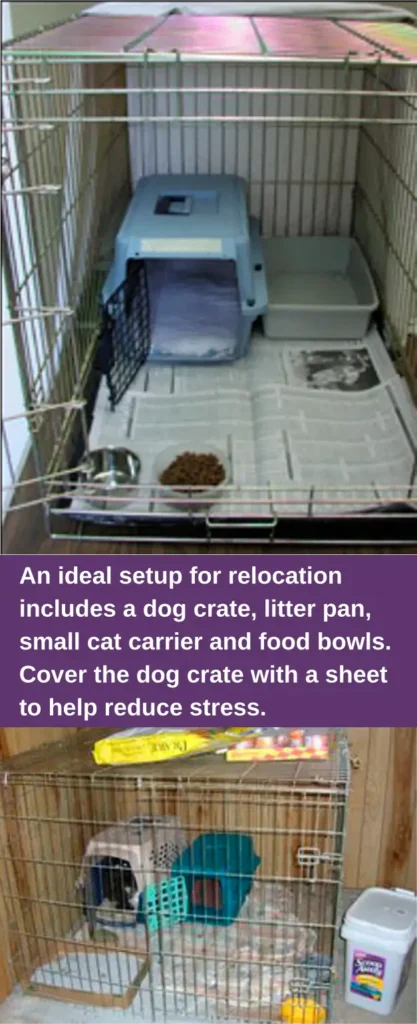 Find a safe and permanent home site with a caretaker committed to providing life-long feeding, watering, medical care and monitoring of the cats.
 - Identify a room or secure area that is clean, quiet, temperature controlled and protects the cats from the elements as much as possible. Be sure there is adequate air and light available.
- Other items needed will include a wire dog crate (minimum size of 2 ft x 3 ft.) litter, litter pans, food and water bowls, a small carrier for the cat to hide in and sheets to cover the crate to help reduce the cats’ stress.
- Cats should be confined where they can see and smell their new surroundings (especially other cats, the caretaker and the feeding station).
Confinement
- Cats must be confined in their crate for a minimum of 2 weeks at the new site to acclimate and identify with its new location and caretaker before release.
- Cats must receive daily care, food, water and litter box cleaning.
Confinement Tips (to increase the chance for successful relocation)
- During the first day or two, the cats may struggle to find a way out (especially at night). They will calm down in a day or two after they realize that they will not be harmed.
- Feed on a regular schedule preferably twice a day (wet and
dry). - Keep the relocation crate covered with a sheet to reduce stress. Rattle the food in a box or bowl each time you feed so the cats associate the sound with food.
- Give the cat treats occasionally.
- Make frequent (at least 2x per day) verbal attempts to bond with cats.
Special Note
If a cat escapes during the confinement period, make sure food and water are left out and that their used litter (for scent) is sprinkled around the area. Cats often hide for a period of time but will stay close. Leave food and water to prevent them from leaving in search of food. When the cats are ready for release, continue feeding in the same area and on the same schedule as before. Typically they will run and hide after initial release.